
Mykonos Beyond the Party: The Windmills, Churches & Hidden Corners Most Tourists Miss
The Mykonos Most People Never See
Mykonos has a reputation problem. Not a bad one exactly, just an incomplete one. The internet has decided this island is pure hedonism, all rooftop bars and pool parties and influencers on sunbeds. So most visitors arrive expecting exactly that, and that’s exactly what they get.
However, beneath all of it sits a genuinely fascinating place. Mykonos has been a crossroads of the Aegean for thousands of years. Traders, pirates, sailors, and pilgrims all passed through here. The island absorbed all of them and kept going. Honestly, Mykonos gets unfairly written off as shallow. Spend a morning walking the backstreets of Chora before anyone else wakes up and you’ll understand why people have been coming here for centuries.
The good news is that mykonos culture and history aren’t buried deep. They’re right there on the surface, hiding in plain sight behind the cocktail menus. You just need to know where to look and when to show up.
The Windmills of Mykonos
More Than a Photo Backdrop
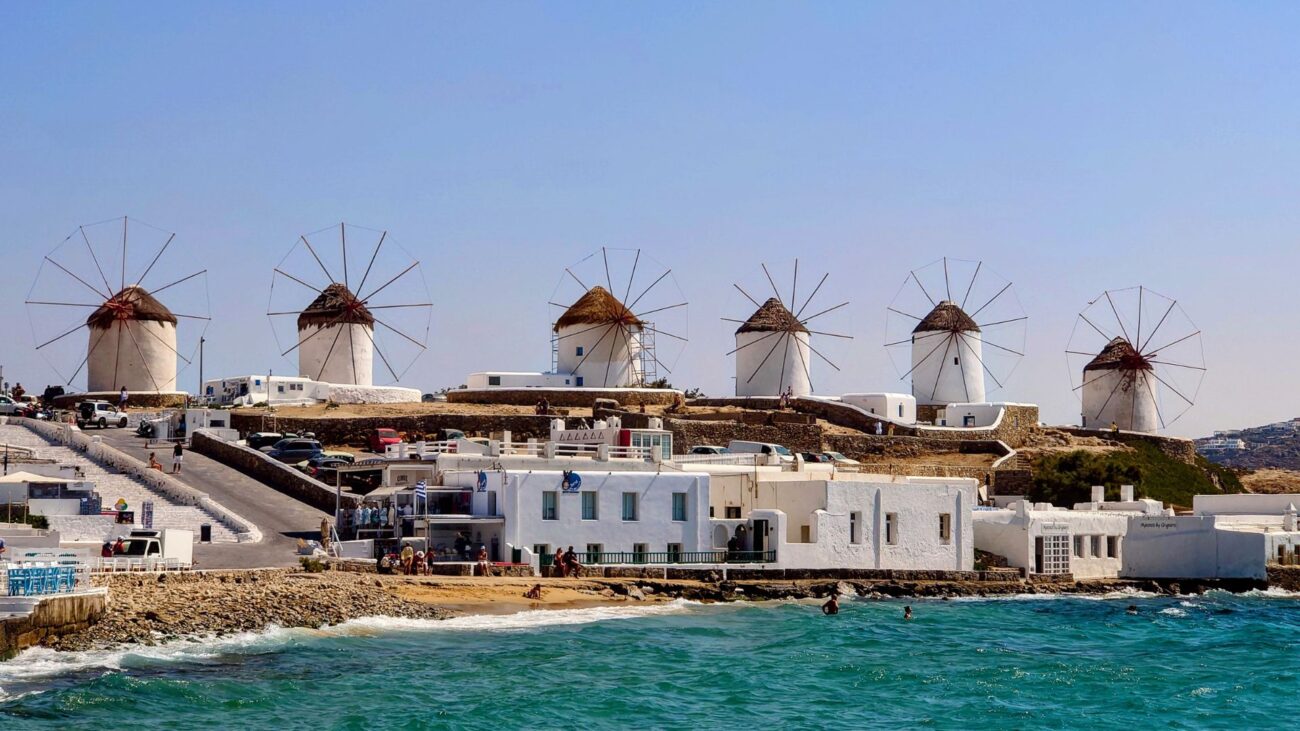
Most people photograph the mykonos windmills from the road and move on in five minutes. Sit with them for half an hour and they start to make sense. These seven Kato Myli windmills on the Chora hilltop date from the 16th century. Venetian settlers built them to mill the island’s grain, taking advantage of the fierce northern winds that batter this coast every summer.
For centuries, those winds powered the island’s economy. The mills ground wheat and barley for the whole region. So when you stand there now watching tourists pose for photos, remember that this was once the island’s industrial heart.
The best time to visit is either early morning or around golden hour before sunset. At those times, the light hits the white cylindrical walls differently. Also, the crowds thin considerably before 9am. At midday in August, the windmill terrace becomes almost unbearable with people.
One windmill, Bonis Mill, has been restored and turned into a small folklore museum. It’s worth stepping inside. The interior shows exactly how the grinding mechanism worked. Beyond that, it gives you a sense of the physical effort this island’s history actually demanded.
Little Venice, Mykonos
What the Sunset Photographs Don’t Show
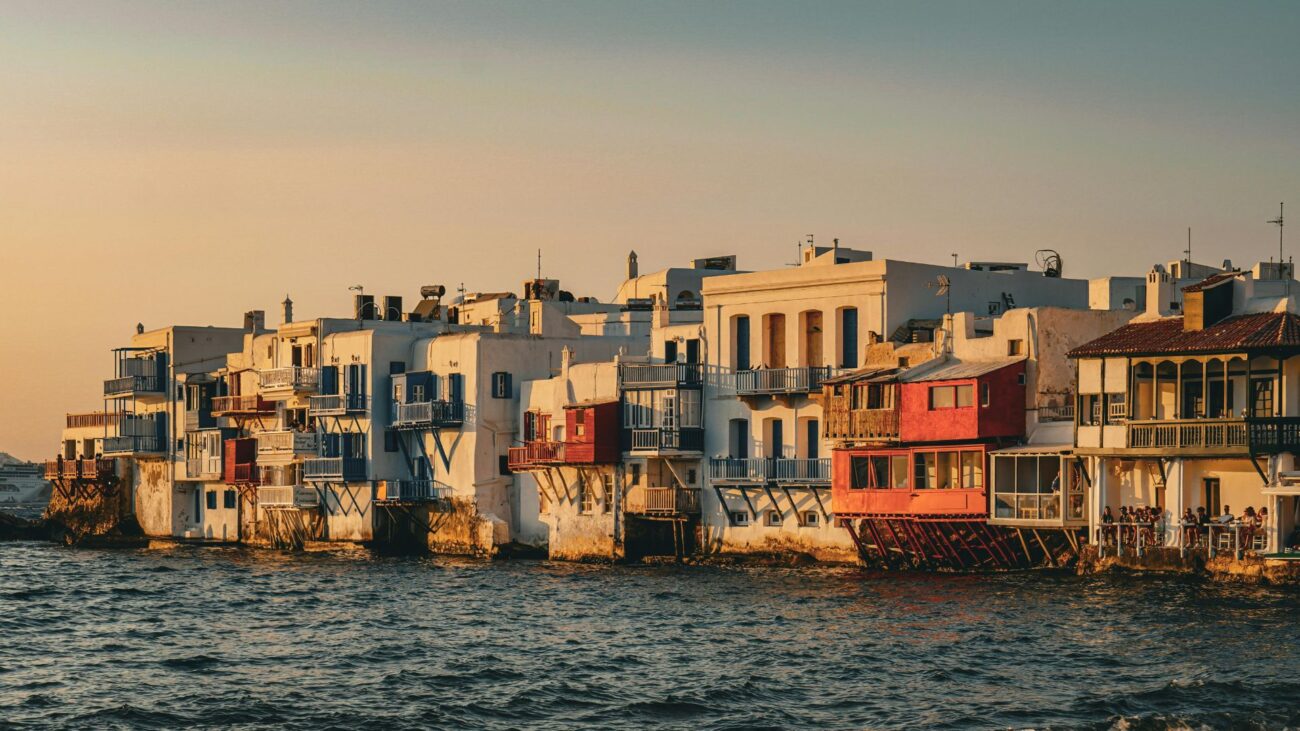
Little Venice mykonos gets reduced to a backdrop for cocktail photos. That’s a shame, because this small cluster of 17th and 18th century buildings tells a genuinely interesting story. Merchants and sea captains built these houses directly over the water. Their balconies extend right to the sea’s edge, which is why the waves crash so dramatically against the walls during rough weather.
Look at the buildings themselves rather than the view from them. The architecture mixes Cycladic whitewash with Venetian-influenced woodwork and colored balconies. That combination appeared nowhere else on the island. These weren’t fishermen’s houses. These were the homes of wealthy traders who wanted their warehouses directly accessible from the water below.
The neighborhood rewards a slow walk early in the morning. By 6am, Little Venice is quiet, cool, and entirely yours. The bars are shuttered, the cobblestones are still damp, and you can actually hear the sea. Meanwhile, by 5pm it’s so packed you can barely move. Timing here is everything.
Also, look for the small Catholic church of Agios Nikolaos tucked at the edge of the neighborhood. It’s easy to miss. However, it marks Mykonos’s long history of Venetian Catholic presence alongside the dominant Greek Orthodox community.
The Churches and Chapels of Mykonos
Paraportiani and Beyond
Mykonos has over 400 churches and chapels for an island of roughly 10,000 permanent residents. That ratio is extraordinary. Many were built by families as private dedications, one for each household, each generation, each safe return from the sea. Walking through mykonos old town means constantly turning a corner and finding another small whitewashed chapel you didn’t expect.
Paraportiani is the most famous of the mykonos churches and rightly so. It sits at the entrance to the Kastro neighborhood, the oldest part of Chora. What looks like one church is actually five separate chapels built over different centuries, fused together into a single organic white mass. No architect designed this overall shape. Instead, it accumulated slowly, chapel by chapel, over hundreds of years.
Go before 8am. At that hour, Paraportiani glows in the early light and the alley in front of it is empty. By 10am, there’s a queue of people waiting to photograph it. The church itself is usually locked, but the exterior is the point.
Further up into the Kastro area, smaller chapels appear on almost every corner. Agios Nikolaos Firkas, Agios Ioannis Theologos, the tiny chapel of Agios Vassilis. None of these appear in most guidebooks. Still, each one has its own story attached and its own small icon niche worn smooth by generations of hands.
For a hilltop chapel experience, walk up to the area above the windmills toward Ano Mera village. The 16th-century Panagia Tourliani monastery there is one of the most important religious sites on the island. Its carved marble iconostasis is genuinely remarkable. Plus, the village square around it feels nothing like the Chora tourist circuit.
Hidden Corners of Mykonos Town
The Streets Worth Slowing Down For
Mykonos town walk should start where the cruise ship passengers don’t go. They flood Matogianni Street and the main shopping lanes, then leave. So the parallel streets running behind and above those routes stay relatively calm even in August.
Enoplon Dinameon Street, running through the heart of Chora, is one of the best. It’s lined with small family homes, the occasional workshop, and tiny chapels squeezed between residential walls. Walk it slowly at around 7am. The residents are just waking up, cats are crossing the lanes, and the flower pots outside each door are being watered. This is hidden mykonos, a few minutes’ walk from the main drag.
Tria Pigadia, meaning Three Wells, is a small square near the center of Chora that most visitors walk straight past. Three ancient wells sit together in the square, connected to old local superstition. According to tradition, any girl who drinks from all three will find a husband on the island. The square itself is shaded and quiet. It’s one of the better spots to sit and let Chora come to you for a while.
The Aegean Maritime Museum on Enoplon Dinameon Street deserves more attention than it gets. It holds an exceptional collection of historical maps, ship models, navigational instruments, and documents tracing the Aegean’s maritime history. Among the things to do in mykonos that actually teach you something, this one ranks highly. It’s small, unhurried, and costs almost nothing to enter.
Also, keep an eye out for Petros the pelican, or rather whichever pelican currently holds the title. The original Petros arrived on the island in the 1950s after a fisherman nursed him back to health. Since then, a succession of pelicans has wandered Chora freely, becoming an unofficial symbol of the island. You’ll likely encounter the current resident near the Old Port or around the fish market in the morning.
How to Experience Authentic Mykonos
Timing, Attitude, and Practical Sense
Mykonos town at 7am before the cruise ships dock is a completely different place. Quieter, slower, more itself. The cruise passengers arrive mid-morning and leave by late afternoon. That window between 7am and 10am is when authentic mykonos belongs to whoever bothered to get up early.
June and September are the better months for this kind of exploration. In July and August, even the quieter streets fill up by mid-morning. However, in June the light is extraordinary, the temperatures are manageable, and the island hasn’t yet shifted entirely into performance mode.
The mykonos beyond the beach version of this island also means eating lunch at a backstreet taverna rather than a waterfront restaurant. Prices drop significantly one street back from any view. Quality often stays the same or improves.
For the best of the things to do in mykonos that go beyond the obvious, give yourself at least one full morning with no plan. Start at Paraportiani, walk through Kastro, find Tria Pigadia, stop at the Maritime Museum, and end up somewhere near the Old Port with a coffee. That loop takes maybe three hours. It will change your understanding of the island completely.
There’s plenty to fill your evenings too. And when the sun goes down and you’re ready for the other side of the island, that exists in abundance as well.
The island has depth. Most people just don’t slow down long enough to find it. Among all the things to do in mykonos, that might be the most rewarding one of all.
*Code applicable only for reservations until the end of August.